


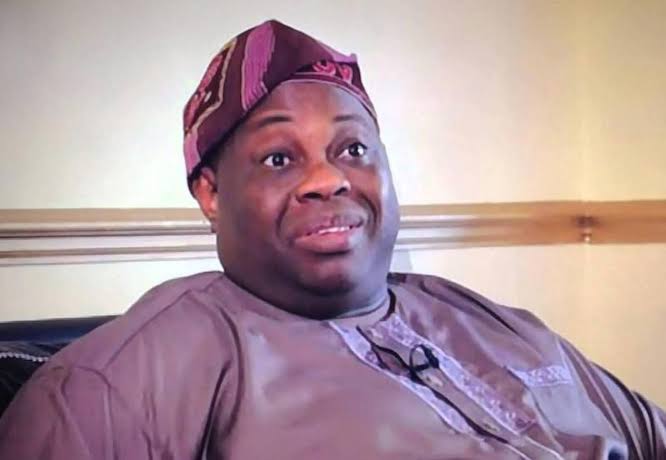
Fuel subsidy removal faces fresh criticism from Dele Momodu as Nigeria weighs fiscal gains, rising debt costs and lingering economic hardship
Dele Momodu, a chieftain of the African Democratic Congress (ADC), criticised President Bola Ahmed Tinubu’s fuel subsidy removal during an Arise Television Prime Time interview on Thursday, August 20, 2026, in Nigeria, arguing that the policy was announced abruptly and has left unanswered questions about subsidy savings and continued government borrowing.
Also read: Wike Calls Atiku ‘Voodoo Economist’ Ahead of 2027
Momodu, a veteran journalist and publisher of Ovation International, said Tinubu’s decision to declare the subsidy gone during his inauguration on May 29, 2023, sent Nigerians an unwelcome message at the start of a new administration.
“Nobody gives bad news on a celebration day. That’s what Tinubu did. He gave bad news to Nigerians from day one, and Nigeria has not recovered since then,” Momodu said.
His criticism comes as Tinubu’s economic reforms remain one of the defining and most contested aspects of his presidency, with supporters pointing to improved public finances and investors’ confidence while critics continue to highlight household hardship and the cost of living.

Tinubu announced the end of the petrol subsidy in his inaugural address at Eagle Square in Abuja on May 29, 2023.
The president argued that subsidy payments had become increasingly difficult to justify and said resources would instead be directed towards infrastructure, education, healthcare and job creation.
The announcement immediately altered the economics of petrol in Nigeria. Pump prices rose sharply, while the removal was followed by the government’s decision to unify the foreign exchange market, putting additional pressure on households and businesses.
For Momodu, however, the central issue is not simply whether the subsidy should have been removed.
He wants greater clarity about what Nigerians were paying before the reform and how much the government has actually saved since it was introduced.
“We don’t even have facts and figures about the subsidy. It’s shrouded in mystery,” Momodu said, questioning why the government continues to borrow after eliminating a major expenditure that successive administrations had described as unsustainable.
That question has gained weight as Nigeria’s debt and financing needs have remained substantial.
In May 2025, Tinubu sought parliamentary approval for external borrowing worth $21.5 billion, alongside €2.19 billion and 15 billion Japanese yen, as part of the government’s broader financing plans.
The scale of debt servicing also illustrates the pressure facing the federal budget.
Nigeria’s 2026 budget provides ₦15.52 trillion for debt servicing against total planned expenditure of ₦58.18 trillion, while the projected fiscal deficit stands at ₦23.85 trillion, or 4.28 per cent of GDP.
Yet the borrowing story is more complicated than a simple comparison between subsidy savings and new debt.
The International Monetary Fund’s 2026 assessment found that Nigeria’s public debt fell to 36.1 per cent of GDP in 2025 from 39.3 per cent in 2024, helped by stronger growth, a firmer naira and the broader economic reforms introduced since 2023.
The IMF nevertheless assessed the country’s overall risk of sovereign stress as moderate.
The IMF has also credited the fuel subsidy removal with reducing fiscal vulnerabilities and helping strengthen Nigeria’s external position.
At the same time, the Fund noted a significant caveat: estimated savings from the final phase of subsidy removal, completed in late 2024 and worth up to 2 per cent of GDP, did not appear to have accrued fully to the budget in 2025.
That finding gives context to Momodu’s demand for clearer figures. It does not establish that the subsidy reform failed, but it does underline the importance of explaining where expected fiscal savings have gone.
The IMF had raised a similar concern in 2025, urging the Nigerian authorities to ensure that savings from subsidy reform were channelled into the budget, particularly towards investment and social protection for households affected by food insecurity.
The human cost remains central to the debate.
Although macroeconomic indicators have improved in some areas, the IMF has repeatedly warned that poverty and food insecurity remain high.
Reuters reported this week that Tinubu’s reforms have won support from investors while contributing to a severe cost-of-living crisis for many Nigerians.
The government, meanwhile, maintains that the reforms were necessary to prevent deeper economic instability.
Finance Minister Taiwo Oyedele said on August 19 that the changes helped avert a potential economic collapse by improving public finances, rebuilding foreign reserves and attracting investment.
The presidency has also argued that ending the subsidy created additional fiscal space for the three tiers of government.
In recent months, government officials have pointed to higher federation revenues, increased state allocations and expanding domestic refining capacity as signs that the difficult reforms are beginning to produce results.
The transition has therefore produced a mixed picture rather than a simple verdict.
On one side are stronger macroeconomic conditions, improved foreign reserves, increased investor interest and a decline in public debt relative to GDP.
On the other are high debt-servicing costs, continuing fiscal deficits, weak household purchasing power and questions over how efficiently the savings from subsidy reform have translated into public spending.
Momodu’s intervention also comes against a more politically charged backdrop.
Nigeria has entered the campaign season ahead of the next presidential election, placing Tinubu’s economic record under closer scrutiny as supporters defend the reforms and opposition figures argue that ordinary Nigerians have yet to feel their promised benefits.
For Momodu, the issue ultimately goes beyond petrol prices.
His criticism is tied to what he sees as a wider accountability problem, arguing that Nigerians should be able to question elected officials over major economic decisions.
The debate over the fuel subsidy removal is therefore unlikely to disappear soon.
Also read: Wike Calls Atiku ‘Voodoo Economist’ Ahead of 2027
Four years after Tinubu made the announcement that reshaped Nigeria’s fuel market, the more consequential question is increasingly about what came after it: how much was saved, where the money went, how much borrowing was necessary, and whether the eventual benefits can reach households that absorbed the immediate shock.


