


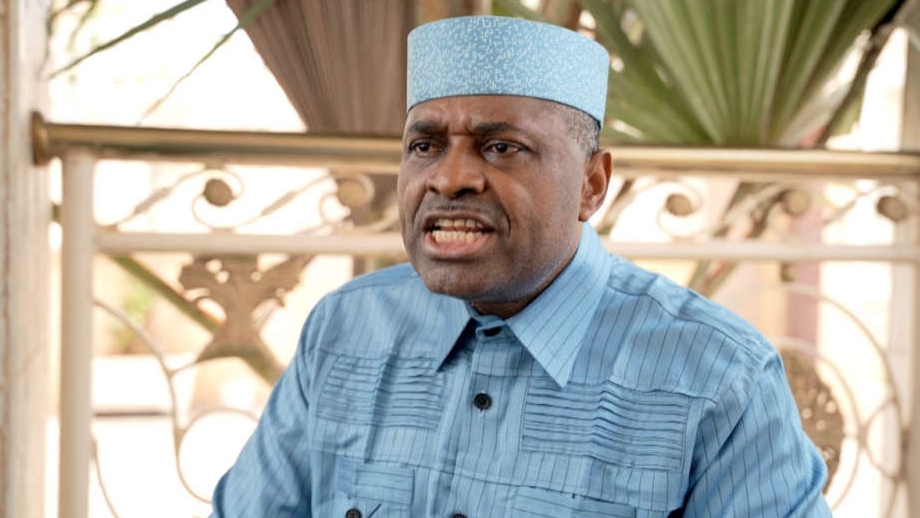
Okonkwo accuses Tinubu of borrowing Nigeria into “slavery”, citing rising public debt and questioning the use of revenue from subsidy removal
Kenneth Okonkwo, a chieftain of the African Democratic Congress, accused President Bola Ahmed Tinubu of borrowing Nigeria into “slavery” during an interview on Channels Television’s Politics Today on Tuesday, 29 September 2026, as he criticised the Federal Government’s economic policies and rising public debt.
Also read: PDP Rejects Adebutu Claims, Hits Back at APC Over Yayi
Okonkwo said the Tinubu administration had failed to deliver the infrastructure and economic benefits he expected to follow the removal of the petrol subsidy.
“Everything about this regime is a failure,” Okonkwo said. “The President is borrowing this country into slavery.”

His comments came amid renewed debate over Nigeria’s rising public debt and the economic consequences of the Tinubu administration’s reforms.
According to figures from the Debt Management Office, Nigeria’s total public debt stood at N166.79 trillion as of 30 June 2026.
The figure covers the debt of the Federal Government, states and the Federal Capital Territory.
Okonkwo questioned why Nigerians were still facing infrastructure and energy challenges despite the government’s decision to end the petrol subsidy.
“He promised you that he was going to remove the fuel subsidy so that he would have enough money to provide public infrastructure for you,” he said.
The ADC chieftain compared the Tinubu administration’s approach with initiatives introduced by previous governments following subsidy-related reforms.
“All the presidents before him, when they removed the subsidy, instituted programmes to reinvest the subsidy savings to help the masses,” Okonkwo said.
He cited the Petroleum Trust Fund, established during the administration of former military Head of State Sani Abacha, and the Subsidy Reinvestment and Empowerment Programme introduced under former President Goodluck Jonathan.
Okonkwo argued that Nigerians had yet to see sufficient improvements in critical areas such as electricity, roads and energy despite the removal of the subsidy.
“This president, who is boasting that by August or September he has gotten all the revenue he needed, has now removed the subsidy completely,” he said.
“He’s not giving us public infrastructure, no power, no good roads, no electricity, no energy.”
He also questioned the government’s spending priorities and alleged that public funds were being wasted on agencies and luxury items.
“What is he doing with the money? They are squandering it on fake agencies. They are squandering it on private jets, private yachts. What is going on in this country?” he asked.
The allegations form part of wider opposition criticism of the government’s economic programme, particularly its borrowing, subsidy reforms, taxation and management of public finances.
The Federal Government has defended the reforms as necessary measures to strengthen public finances, attract investment and create a more sustainable economic framework.
Government officials have also said savings from subsidy removal are being redirected towards infrastructure and targeted interventions.
The scale of Nigeria’s debt has nevertheless remained a prominent issue in public debate.
The DMO’s June figures show that the country’s debt stock has increased substantially from the N49.85 trillion recorded in March 2023.
The increase reflects new borrowing as well as other changes in the composition and valuation of public debt.
However, the size of the debt alone does not establish whether borrowing has been productive or wasteful.
That assessment depends on factors including how borrowed funds are deployed, the cost of servicing the debt, the terms of individual loans and the economic returns generated by government spending.
Okonkwo’s remarks come as the ADC prepares for a more prominent role in Nigeria’s political landscape ahead of the 2027 general elections.
His criticism of the Tinubu administration reflects a broader opposition argument that the economic sacrifices associated with the government’s reforms have not yet translated into adequate improvements in living standards and public infrastructure.
The administration, meanwhile, maintains that its reforms are designed to address longstanding fiscal problems and create the foundation for stronger economic growth.
Also read: PDP Rejects Adebutu Claims, Hits Back at APC Over Yayi
With public debt, revenue generation and the impact of subsidy removal likely to remain major issues ahead of 2027, the debate over how Nigeria finances its development is set to become increasingly prominent.


