


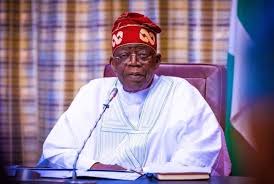
Nigeria reflects on Tinubu’s 2025 government actions as major decisions spark nationwide debate and reshape politics, security and public life
President Bola Tinubu’s 2025 government actions continued to reverberate across Nigeria throughout the year, reshaping governance, security and public life while sparking widespread debate over their impact and intent.
Also read: ADC Criticises Tinubu’s Nomination of Yakubu as Ambassador
From emergency rule in Rivers State to sweeping reforms in education, taxation and foreign policy, the administration delivered a series of far-reaching decisions that defined the national discourse.
In March 2025, the Federal Government imposed emergency rule in Rivers State following a prolonged political crisis after Governor Siminalayi Fubara dissolved the state legislature.

The measure suspended the governor, the deputy governor and all lawmakers for six months.
A retired Navy vice admiral, Ibok-Ete Ekwe, was appointed as administrator to stabilise the state and protect vital oil assets. The suspension was lifted in September, though opposition politicians continued to denounce the intervention as an overreach.
The education sector experienced one of its most significant shifts in years when the Federal Ministry of Education introduced a revised national curriculum for the 2025/2026 session.
The new syllabus increased focus on vocational and digital skills while strengthening civic and heritage studies.
The strategy aimed to prepare pupils for a changing labour market, although teachers and parents questioned whether schools were adequately equipped to deliver the reforms.
Public frustration rose sharply in August when the Nigeria Immigration Service increased passport fees to 100,000 naira for the standard five-year booklet and 200,000 naira for the ten-year option.
Interior Minister Olubunmi Tunji-Ojo said the adjustment would support automation and reduce delays. Many citizens, however, criticised the timing as economic pressures continued to weigh on households.
Security remained a dominant concern throughout the year. In November, the government declared a national security emergency and approved the recruitment of 20,000 police officers and the deployment of forest guards. Tinubu said the move was vital to halt kidnappings, banditry and insurgency.
The announcement was welcomed by some communities but also drew scepticism over whether new personnel alone could deliver lasting safety.
In June, Tinubu signed four tax laws that consolidated multiple revenue statutes into a unified framework, establishing a new national revenue service. The reforms aimed to simplify compliance and curb leakages.
Business groups described the legislation as a potential turning point for public finance management.
Diplomatic gaps were also addressed when Tinubu forwarded three ambassadorial nominees to the Senate after more than two years of vacancies in key missions.
The move followed persistent pressure from diaspora groups and foreign policy analysts who warned that the absence of ambassadors weakened Nigeria’s global standing.
October saw a dramatic reshuffle of military leadership. Olufemi Oluyede was appointed Chief of Defence Staff, while Waidi Shaibu, S. K.
Aneke and Idi Abbas took command of the Army, Air Force and Navy. The reorganisation signalled an aggressive push to revitalise national security strategy.
The year’s most emotionally charged controversy emerged when the government included Maryam Sanda in an early clemency list. Her 2020 conviction for the death of her husband had drawn national attention.
Following public outrage, the presidency withdrew the full pardon and instead commuted her death sentence to twelve years in prison.
Tinubu also used the October clemency exercise to issue symbolic pardons to historical figures including Herbert Macaulay, Mamman Jiya Vatsa and members of the Ogoni Nine, gestures that many described as restorative.
The Nigerian Education Loan Fund continued to expand its operations, disbursing more than 56 billion naira by May and reaching nearly 300,000 students.
The support eased financial strain on households even as debates persisted over transparency and repayment rules.
Also read: APC Praises Tinubu’s Bold Security Emergency Move
The succession of decisive actions ensured that Tinubu’s 2025 government actions dominated public discussion, leaving a lasting imprint on Nigeria’s political and social landscape.


